
 TCT Saw Blade
 HERO Sizing Saw Blade
 HERO Panel Sizing Saw
 HERO Scoring Saw Blade
 HERO Solid Wood Saw Blade
 HERO Aluminum Saw
 Grooving Saw
 Steel Profile Saw
 Edge Bander Saw
 Acrylic Saw
 PCD Saw Blade
 PCD Sizing Saw Blade
 PCD Panel Sizing Saw
 PCD Scoring Saw Blade
 PCD Grooving Saw
 PCD Aluminum Saw
 Cold Saw for Metal
 Cold Saw Blade for Ferrous Metal
 Dry Cut Saw Blade for Ferrous Metal
 Cold Saw Machine
 Drill Bits
 Dowel Drill Bits
 Through Drill Bits
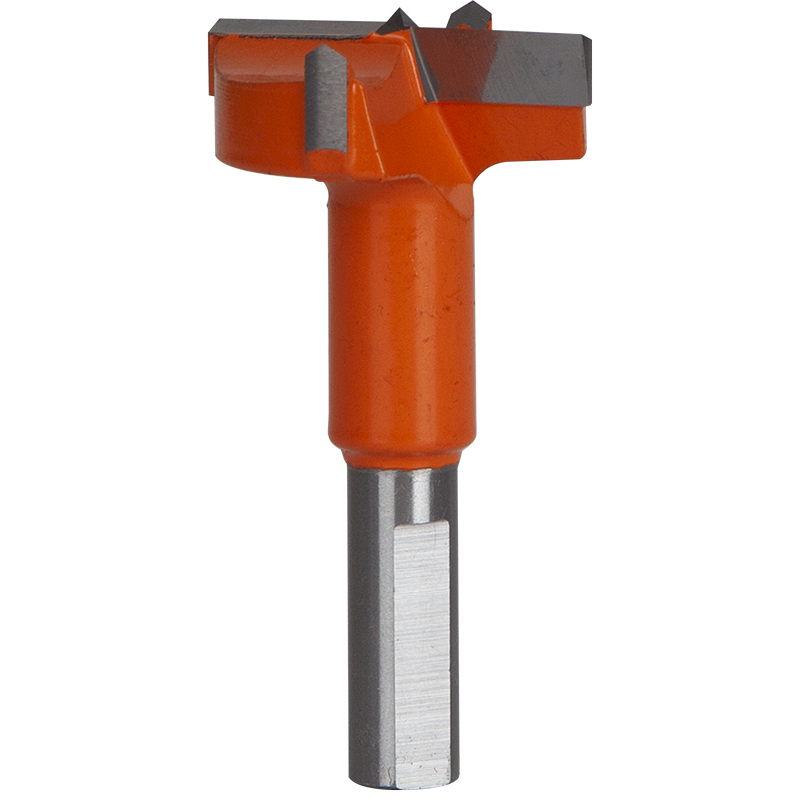 Hinge Drill Bits
 TCT Step Drill Bits
 HSS Drill Bits/ Mortise Bits
 Router Bits
 Straight Bits
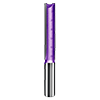 Longer Straight Bits
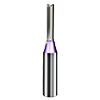 TCT Straight Bits
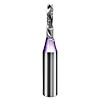 M16 Straight Bits
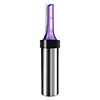 TCT X Straight Bits
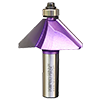 45 Degree Chamfer Bit
 Carving Bit
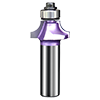 Corner Round Bit
 PCD Router Bits
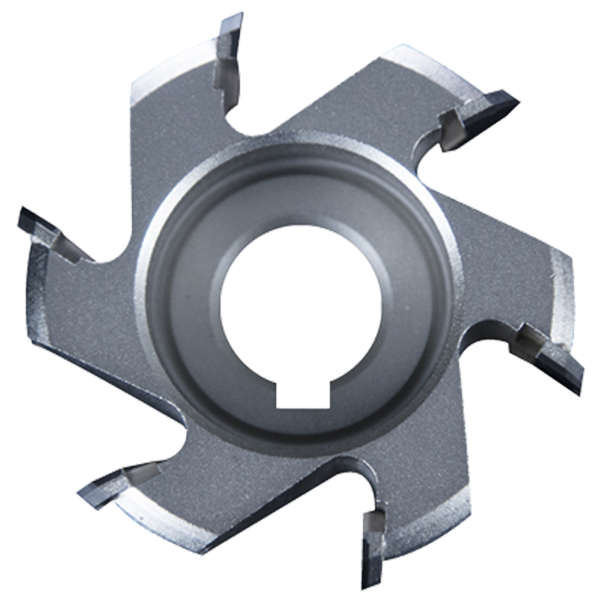 Edge Banding Tools
 TCT Fine Trimming Cutter
 TCT Rough Trimming Cutter
 TCT Pre Milling Cutter
 Edge Bander Saw
 PCD Fine Trimming Cutter
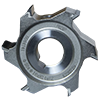 PCD Rough Trimming Cutter
 PCD Pre Milling Cutter
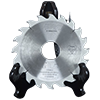 PCD Edge Bander Saw
 Other Tools & Accessories
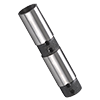 Drill Adapters
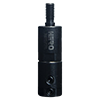 Drill Chucks
 Diamond Sand Wheel
 Planer Knives



In the metal sawing process, many operators focus solely on the final cut surface quality or tool wear rate, overlooking the most intuitive “signal light”—chips. The morphology, color, and curl of the chips directly reflect whether the current cutting parameters are reasonable.
Based on professional sawing experimental data, this article analyzes how to diagnose machining conditions by observing chip morphology and provides specific parameter adjustment solutions to help you achieve efficient and cost-effective sawing operations.
I
Chip Morphology vs. Parameter Reference Table: Quick Diagnostic Guide
1. Powdered / finely divided iron filings
• Description: Chips appear as fine granules or powder without forming continuous curls.
• Parameter Status: Fz (Feed per tooth) is too small.
• Cause Analysis: Due to insufficient feed, the saw teeth are actually rubbing against the material surface rather than cutting effectively. This results in low efficiency and work hardening.
• Adjustment Direction: Increase Fz (increase feed speed) to allow the teeth to penetrate deeper.
2. Tight Spiral Curl / C-Shape Curl (Silver-White or Slight Yellow)
• Description: Chips form regular C-shapes or tight spirals, with a normal silver-white color or slight temper color.
• Parameter Status: Fz is appropriate.
• Cause Analysis: This is the ideal cutting state, indicating moderate cutting load and good heat dissipation.
• Adjustment Direction: Maintain current parameters; no adjustment is needed.
3. Large-Arc Thick Curl (Dark Blue / Blackened)
• Description: Chips have a large curl radius, appear thick, and show a dark blue or even blackened color.
• Parameter Status: Fz (Feed per tooth) is too large.
• Cause Analysis: Excessive chip load leads to a sharp increase in cutting resistance and excessive heat causing chip oxidation.
• Adjustment Direction: Decrease Fz (reduce feed speed) to lighten the load per tooth.
4. Discolored Chips (Blue/Black) with Burnt Smell
• Description: Regardless of shape, color is severely blue or black, or accompanied by a burnt smell.
• Parameter Status: Cutting speed (V) is too high or coolant is insufficient.
• Cause Analysis: Cutting temperature exceeds the heat resistance limit of the tool, leading to tool annealing and failure.
• Adjustment Direction: Reduce cutting speed V or check coolant (flow, concentration, position).
5. Intermittent Chips of Uneven Length
• Description: Chips are discontinuous, varying in length, or even fragmented.
• Parameter Status: Material is inhomogeneous or contains hard spots.
• Cause Analysis: Workpiece material has casting defects, impurities, or uneven hardness.
• Adjustment Direction: Inspect material batch; reduce feed speed if necessary.
II
In-Depth Analysis: Ideal State of Chip Curl
Beyond the above classifications, understanding the “chip curl mechanism” is crucial for fine-tuning. The degree of chip curl directly corresponds to the “chip load per tooth.”
1. Insufficient Chip Curl (Too Loose)
Visual: Loose large arcs, like an improperly coiled spring.
Consequences: Chip dragging, clogging, poor surface finish, tooth edge chipping.
Solution: Increase chip load per tooth.
2. Excessive Chip Curl (Too Tight)
Visual: Very tight small rings, or even solid balls.
Consequences: Compressed evacuation space, clogging, rough surfaces, rapid tooth wear.
Solution: Decrease chip load per tooth.
3. Ideal State of Chip Curl
Visual Characteristic: Forms a standard “6” shape or uniform spiral. Chips are evacuated smoothly, heat is carried away effectively.
III
Summary and Recommendations
In metal sawing, “cutting by chip observation” is a core skill. It is recommended that operators perform a test cut and collect/observe chips every time they start the machine or change materials:
- 1. If you see powder, boldly increase the feed.
- 2. If you see blue or black discoloration, immediately check coolant or reduce speed.
- 3. If you see standard C-shaped chips, congratulations, you have found the optimal machining window.
By scientifically analyzing chip morphology, we can avoid tool waste and significantly improve surface finish, maximizing benefits.
Post time: Oct-15-2026


